
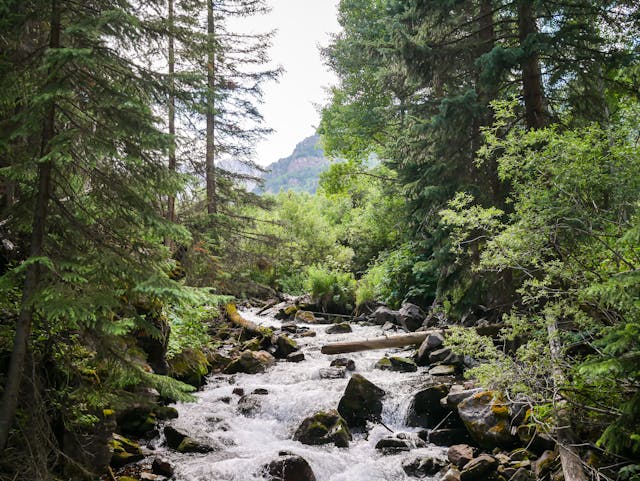
Before there were calendars marking Earth Day, there was the turning.
Before there were words for gratitude, there was the first creature drawing breath from air that had never belonged to it — air given freely, without condition, without invoice.
The Earth was already ancient by then. She had been composing herself for billions of years: hammering mountain ranges, softening them back to plains, writing rivers and then erasing them, patient beyond any patience we can imagine. And into this long, elaborate making, life arrived — and she kept giving.
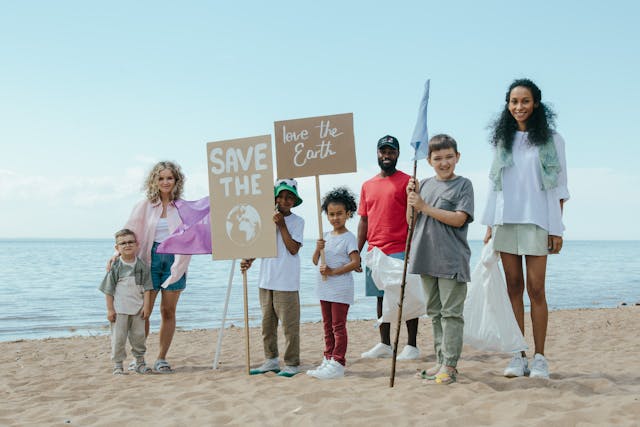
Today, on Earth Day, many people will plant a tree or pick up litter or attend a rally. These are worthy acts. But underneath all of them lives something older than activism: the desire to say thank you to the one who made us possible.
Animism — the understanding that the world is alive, that rivers and forests and stones are not merely resources but presences — offers us a language for that gratitude. It tells us what our bones already know: we did not arrive on Earth. We arose from her.
Consider what she offers, freely, every single day. The oxygen in your next breath was exhaled by a forest you have never visited. It was filtered through leaves that have never heard your name and love you anyway.

The water you drank this morning has been a glacier, a cloud, a river, an ocean, a drop of dew on a spider’s web — and now it is you, briefly, before it continues its endless journey.
The food that warms you from the inside was sunlight, once.
The Earth caught that light and turned it into soil and root and fruit and now into the particular warmth behind your sternum. All of this, given.
An animist does not see this as metaphor. The forest that breathes for us is not like a generous relative — it is one.
The river is not merely a useful system for transporting water; it is an elder, a storyteller, a memory of rain that fell ten thousand years ago.
When indigenous peoples speak of the land as mother, grandmother, as kin — they are not being poetic. They are being precise. A precision our culture largely lost somewhere between the invention of ownership and the invention of extraction.
· · ·

What might it mean to spend just this one day — this single rotation of our remarkable blue world — practicing that precision again?
To wake in the morning and feel the mattress beneath you and know that it, too, is the Earth in a different form? To step outside and let the sky be not just the sky but the atmosphere, the breath of a living system that has kept the temperature livable for the duration of every human life ever lived? To hear birdsong not as background noise but as the Earth speaking in one of her ten thousand voices?
Gratitude does something to us. Neuroscientists will tell you it rewires neural pathways. Poets will tell you it opens the chest. Animists will tell you it restores the relationship — and the relationship is everything.
When we feel genuinely thankful for the soil, we cannot so easily poison it. When we feel the river as kin, we cannot so easily treat it as a drain. Gratitude is not soft or sentimental. It is one of the most revolutionary forces available to us, because it transforms how we see, and how we see determines how we act.
So today, wherever you are — asphalt city or meadow, glass tower or garden — you are standing on her. The rock beneath the concrete, the soil beneath the rock, the molten iron heart at the center of it all: that is the body that holds you.
You have never, not once, floated free of her. She has always been underneath you. She has always known your weight, and held it, and found it worth holding.
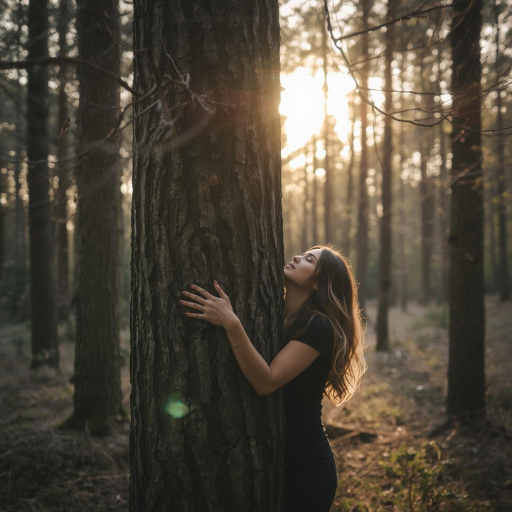
Put your hand on a tree today, if you can. Not to study it — just to feel it. Feel the roughness of bark, which is the tree’s own skin, grown slowly over years. Notice the faint temperature difference between the shaded and sun-warmed sides.
If you are very still, you might feel something that isn’t quite movement, isn’t quite stillness — a presence. You are not imagining it. You are remembering it.
Thank the soil under your feet for being composed of ten thousand years of fallen leaves and ancient rain and creatures that gave their bodies back so that new life could rise from them. Thank the sun for not having exploded, for maintaining the precise degree of furious warmth that makes everything we love possible.
Thank the bees for their bewildering industry, the fungi for their invisible networks of care threading through the dark under every forest floor, the earthworms for turning the dead into the living, the tides for arriving faithfully every single day since before there were eyes to watch them.
· · ·
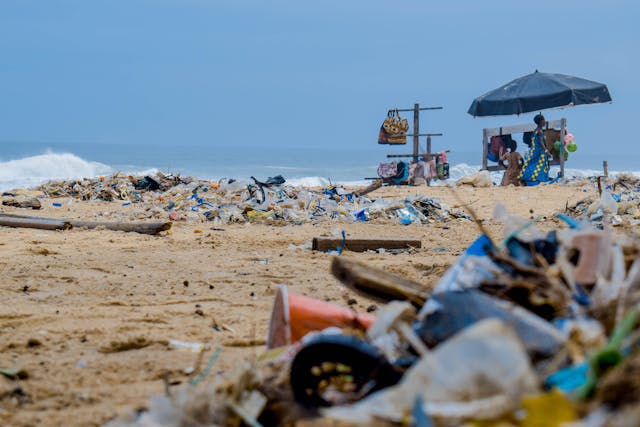
There is grief here too, woven through the gratitude. The Earth is unbalanced, and we know it. The gratitude is not naïve. We give thanks to someone we love and have also damaged and disrespected. That is a more complicated, more adult kind of thanks — the kind that carries within it a reckoning, a return, a commitment to repair.
But let grief take its proper share today, and give gratitude its share too. The forests that remain are still extraordinary. The oceans, even burdened, still catch the light and hold unimaginable life.
Spring is still arriving in the northern hemisphere, right on time, green and unreasonable and gorgeous. Seeds are splitting open in the dark, finding their way upward by instinct so old it predates the word for it. Life is still happening everywhere, tirelessly, because the Earth is still, in her battered and radiant way, giving.
Happy Earth Day.
Come home to her.
She has been waiting, patiently, with her arms full of gifts.